




Beware of AI Scams in the Crochet Community
Updated: Jun 3, 2025
The crochet community faces several troubling trends today. From low-cost, mass-produced crochet items sold at Temu to the sad closure of Joann's stores, the landscape is shifting. Unfortunately, people are being exploited in the process. Vendors, often using slave labor, are selling these items at ridiculously low prices. Additionally, Etsy is becoming bogged down with mass-produced goods instead of unique handcrafted treasures. Among these issues, one trend stands out: AI-generated crochet patterns.
Understanding AI-Generated Images and Crochet Patterns
Recently, I've observed many AI-created crochet patterns emerging in the market. Some are entertaining, like TikTok videos where creators ask AI to generate a crochet pattern for characters like Bluey. These playful interpretations often yield laughable results. A book published by Ulysses Press collects these amusingly eccentric ChatGPT patterns. If you need a good chuckle, I recommend checking it out.
However, most AI-generated patterns are not harmless. Instead, they trick unsuspecting buyers into purchasing fraudulent products or bogus patterns, benefiting lazy and uncreative sellers. These scams fall into two main categories. The first includes sellers misusing basic or entirely stolen AI-generated patterns and marketing them with AI-generated images. Fortunately, seasoned crocheters usually spot these scams easily.
The second category is much more predatory. In these cases, scam artists sell physical crochet products using AI-generated images. They deceive customers seeking handmade items, steal business from real artisans, and send out cheap, subpar imitations instead.
Sadly, I've noticed little action from Etsy, where many of these scams flourish. Despite their advertisements emphasizing handmade items, the platform seems indifferent to the growing concerns about scams and mass-produced goods.
While we await action from Etsy, it's essential for us to remain vigilant against these AI scammers. As someone experienced in both technology and crochet, I've created a quick guide to help identify AI-generated crochet images and patterns. This guide mainly focuses on crochet images to assist both crocheters and non-crocheters in distinguishing real products from fakes. I won't delve deeply into AI-generated patterns since they're often hard to identify without images of real crocheted items. However, recognizing computer-generated crochet images will be vital in avoiding these dubious patterns.
The Three C’s of Recognizing AI in Crochet
When identifying whether an image is an AI-generated crochet, keep an eye out for the three C's: Colors, Collection, and Construction. Let’s explore each of these in detail, supported by examples found on Google Images.
Colors
AI struggles to replicate realistic colors accurately. There’s usually something off about it. It feels akin to autotune but for visuals—an uncanny valley of lighting. In some cases, the oddities are glaringly obvious. Take, for example, a generated cat that showcases perfectly even shadows and strange shading on its ears.


The second cat might seem somewhat real, but the interaction with hands and the overall photo manipulation give it away. When scrutinizing crochet images, examine the shadows, interactions with background objects, and colors—especially those of the background elements.
When it comes to yarn specifically, smooth gradients on small body parts are virtually impossible with current crochet materials. Gradients usually either span a larger quantity of yarn or create abrupt lines rather than soft blends. While it is feasible to achieve a gradient with different colored yarns, the transition lines will still remain visible.

Additionally, eyes and accessory features can be significant indicators. While certain styles, like beanie boo eyes, exist, they are typically made of specific materials such as plastic or resin. An image featuring eyes resembling cartoon characters likely doesn’t reflect a real product.
Collection
The second C—Collection—refers to the number of images showcased in a crochet listing. Authentic crochet artists often include multiple pictures of their work from different angles. Patterns should display various color options or modifications. Physical crochet items rarely come with just one photo.
For example, Yulia the Polar Bear on my site currently shows only one image because I neglected to take additional photos before selling the original. This is a rare occurrence and should raise a big red flag, especially for shops that consistently lack multiple images.
If a listing lacks several images showing different perspectives or videos demonstrating the item, scrutinize it for other signs outlined in this guide.
Regarding collective listings, be cautious if the pricing appears suspiciously low for a physical crochet item or exorbitantly high for a pattern. Look out for listings that lack detailed descriptions, especially regarding yarn types and materials. Images should also provide a sense of scale for the items.

I’ve noticed a proliferation of mammoth crochet projects online, and very few are genuine. Crochet items can be costly to create due to expenses related to yarn, filling, and structural supports. Consequently, large projects typically have extensive photographic documentation to showcase the artist's hard work.

If this elephant were real, you would see numerous angles shared across social media—not just a single shot. Moreover, the excessive smoothness of the stuffing and an unrealistic drape of the ears are dead giveaways.
Construction
Understanding construction elements can be challenging for non-crocheters, as it may be hard to recognize what's feasible within crochet. For instance, consider this bird image:

Crocheters will quickly spot issues, like the beak that has an impossible increase and an extra row of stitches appearing randomly. Furthermore, the feathers resemble an incorrect version of an alligator scale stitch with overlapping that creates noticeable gaps. The head’s structure is also impossible to replicate with actual crochet techniques.
For those unfamiliar with crochet, here are some construction cues to monitor.
Body Parts
Crochet body parts can seamlessly blend into the main body, but an overly smooth integration is a telltale sign of AI. The highest level of integration is possible with four-legged designs. However, limbs typically need to be either directly worked into the row or sewn on afterward. If a body part appears to be magically affixed, it’s likely artificial.

Moreover, crochet is constructed in rounds (circles) or rows (flat lines). Weird curved lines typically indicate areas stitched onto the main crochet or separately affixed. It’s exceptionally challenging to change directions abruptly without creating separate sections.
In the image of the dog below, we see a round muzzle that inexplicably turns straight across the mouth without a sewn-on piece. Additionally, the ears exhibit peculiar stitching patterns.

Stitches
Another indicator to look out for is the stitches themselves. AI often fails to produce clear stitches, or they may appear disconnected. In the dog's body above, each stitch resembles a puff stitch rather than a traditional crochet stitch.
Perfectly Imperfect
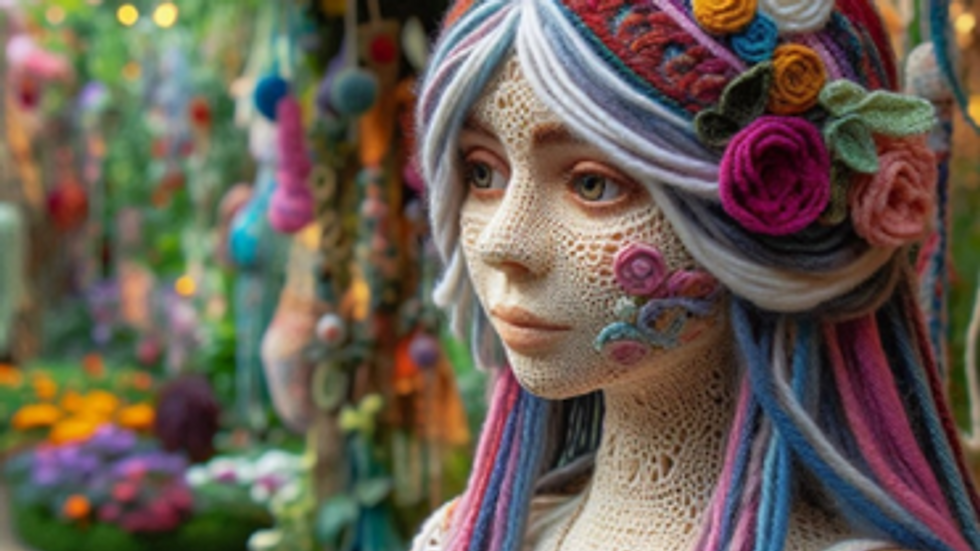
The stitches issue ties into the “too-perfect” fallacy of AI. Current AI technology struggles to replicate authentic textile textures. Real crochet is created from fibers and yarn—it's not sculpted. You’ll observe bulging bits of fluff and fibers. Varied stitch tension leads to uneven patterns, revealing the handmade nature of crochet.
However, AI-generated images might also present their version of imperfection. They might lack fingers, buttons, or attachments; have impossible shapes; or display overly smooth features resembling sculpted clay. These errors are strong indicators that an image is generated by AI and should raise your skepticism.
What to Do if You Spot AI Crochet?
If you encounter AI crochet images, the most crucial step is not to engage. Avoid purchasing items with AI imagery. Refrain from interacting with shops that utilize AI images, and don’t like or comment on social media posts featuring them. Even calling out the AI creator or criticizing the work should be avoided. You can post warnings on your pages, but do not engage directly with their accounts.
This approach is counterproductive and ultimately benefits them. In today's algorithm-driven social media landscape, outrage is often as effective as appreciation for creators.
If you find a seller using AI, your next course of action should be to report them. Leave reviews on shop pages or Etsy accounts to alert potential customers about dubious AI involvement. Encourage others to report misleading listings in hopes of having them removed. Sharing informative posts, such as this one, can help raise awareness about AI scams.
Unfortunately, our options may be limited in tackling these issues.
To all those vigilant against AI scams and who actively share information to educate others—thank you. Your hard work is invaluable as we navigate this treacherous landscape. Hopefully, platforms like Etsy will eventually start addressing these fraudulent listings.
And to those of you engaging in the sale of AI "art," as someone who dedicates countless hours to creating genuine crochet items, your actions are profoundly disappointing.

Comments